
Can Lack of Sleep Cause Anxiety? Understanding the Connection
Many people wonder whether lack of sleep can cause anxiety, and research increasingly suggests the answer is yes. Sleep deprivation and anxiety share a close, two-way relationship: poor sleep can trigger or intensify anxious feelings, while anxiety itself often makes restful sleep harder to achieve. For individuals struggling with racing thoughts at 3 a.m. or a persistent sense of unease during the day, understanding this connection is often the first step toward relief.
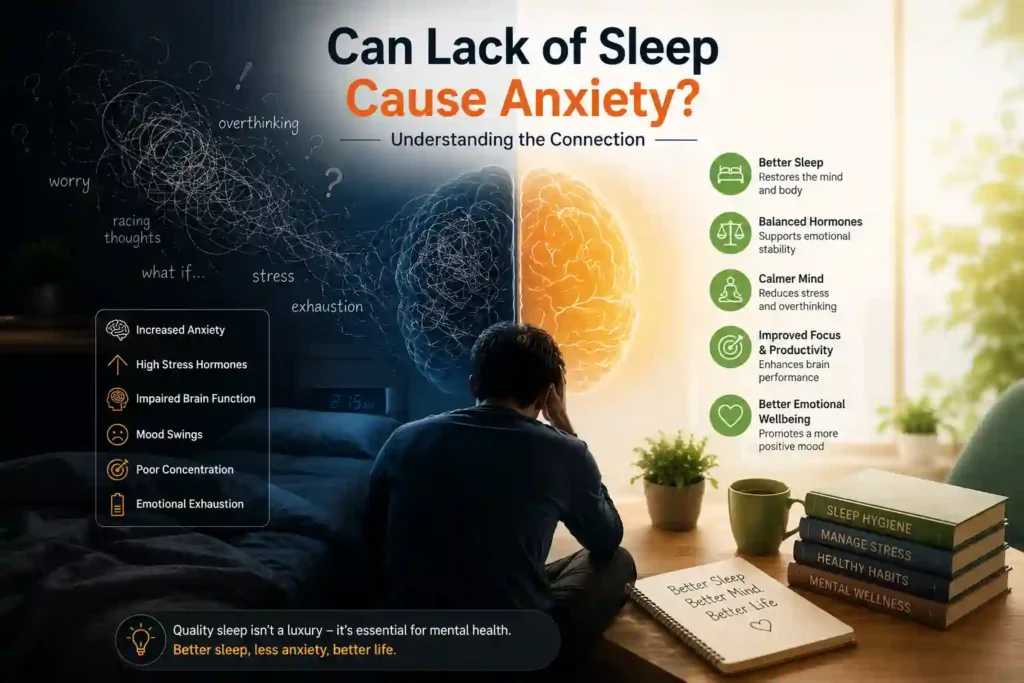
How Sleep Deprivation and Anxiety Are Connected
The relationship between sleep and anxiety is bidirectional. Worry and stress can delay sleep onset or cause frequent waking, and in turn, insufficient rest leaves the brain less equipped to regulate emotion the next day. Sleep researchers have observed that even a single night of poor sleep can heighten activity in the amygdala, the brain's threat-detection center, while weakening its communication with the prefrontal cortex, the region responsible for calm, rational thinking. This imbalance helps explain why anxiety often feels sharper and less manageable after a bad night's sleep.
Does Poor Sleep Increase Anxiety?
Evidence from sleep science supports the idea that poor sleep increases anxiety, particularly state anxiety, the temporary, situational unease people feel in response to stress. A systematic review of experimental studies found that both total and partial sleep deprivation reliably raised state anxiety levels in participants, reinforcing what many people already sense intuitively: a rough night makes the next day feel harder to face.
Can Insomnia Cause Anxiety Attacks?
Chronic insomnia does more than leave people tired. Over time, ongoing sleep loss can contribute to the development of anxiety disorders, including generalized anxiety disorder (GAD), and may increase the likelihood of panic-like symptoms in those already prone to anxious reactions. People with sleep disorders such as obstructive sleep apnea, which repeatedly interrupts deep sleep and REM sleep, also show higher rates of anxiety and related mental health concerns.
The Brain Science Behind Sleep and Emotional Wellbeing
Restorative sleep plays a central role in emotional regulation and cognitive performance. During deep sleep and REM sleep, the brain consolidates memories, clears metabolic waste, and resets stress-response systems. When sleep is cut short, the body's fight-or-flight response becomes easier to trigger, and cortisol, the primary stress hormone, tends to stay elevated. Meanwhile, melatonin production and the circadian rhythm that governs the sleep cycle can fall out of sync, compounding fatigue and daytime sleepiness. The nervous system, caught between an overactive sympathetic branch and an under-engaged parasympathetic branch, struggles to find a resting state, which many people experience simply as a nagging sense of anxiety.
Recognizing Sleep Anxiety Symptoms
Sleep anxiety symptoms can appear at bedtime or throughout the day. Common signs include a racing mind while trying to fall asleep, waking frequently during the night, muscle tension, irritability, difficulty concentrating, and a heightened startle response. Left unaddressed, this pattern can create a cycle in which anxiety disrupts sleep quality, and poor sleep quality feeds further anxiety, making it harder to break without support.
How to Improve Sleep and Reduce Anxiety
Sleep anxiety symptoms can appear at bedtime or throughout the day. Common signs include a racing mind while trying to fall asleep, waking frequently during the night, muscle tension, irritability, difficulty concentrating, and a heightened startle response. Left unaddressedaImproving sleep hygiene is often the starting point for reducing anxiety linked to poor rest. Helpful habits include keeping a consistent bedtime routine, limiting screens and caffeine in the evening, and practicing relaxation techniques such as mindfulness or progressive muscle relaxation before bed. For many, these steps alone can restore a sense of calm and improve sleep quality over time., this pattern can create a cycle in which anxiety disrupts sleep quality, and poor sleep quality feeds further anxiety, making it harder to break without support.
When self-help strategies aren't enough, professional support can make a meaningful difference. Cognitive behavioral therapy (CBT), and specifically Cognitive Behavioral Therapy for Insomnia (CBT-I), is considered a leading evidence-based anxiety treatment and a well-studied approach to behavioral sleep medicine. A licensed psychologist or licensed psychiatrist can conduct a sleep assessment or full sleep disorder evaluation to identify whether insomnia, anxiety, or both are driving the problem, and can recommend a personalized stress management program. Those seeking care might consider looking for a sleep specialist near me or a psychologist near me, or exploring online anxiety therapy and online psychologist consultation options for added convenience. A reputable mental health clinic or sleep clinic will typically offer both routes.
Frequently Asked Questions About Sleep and Anxiety
Reference
Sleep Foundation — "Anxiety and Sleep: Understanding the Connection for Better Rest"
NCBI Bookshelf — "Extent and Health Consequences of Chronic Sleep Loss and Sleep Disorders"
Harvard Medical School, Division of Sleep Medicine — "Sleep and Mood"
Note: This article is for general informational purposes and is not a substitute for a professional mental health evaluation. Anyone in emotional distress or experiencing a mental health crisis should reach out to a licensed mental health professional or local emergency services.
Read More
How to Calm Anxiety Before Sleeping Naturally
When Is Anxiety Normal and When Should You Worry?
Signs You May Need to See a Mental Health Professional
Morning Anxiety: Causes, Symptoms, and Treatment
How to Stop Overthinking at Night: Practical Tips for a Calmer Mind