
Common Mental Health Myths and Facts You Should Know
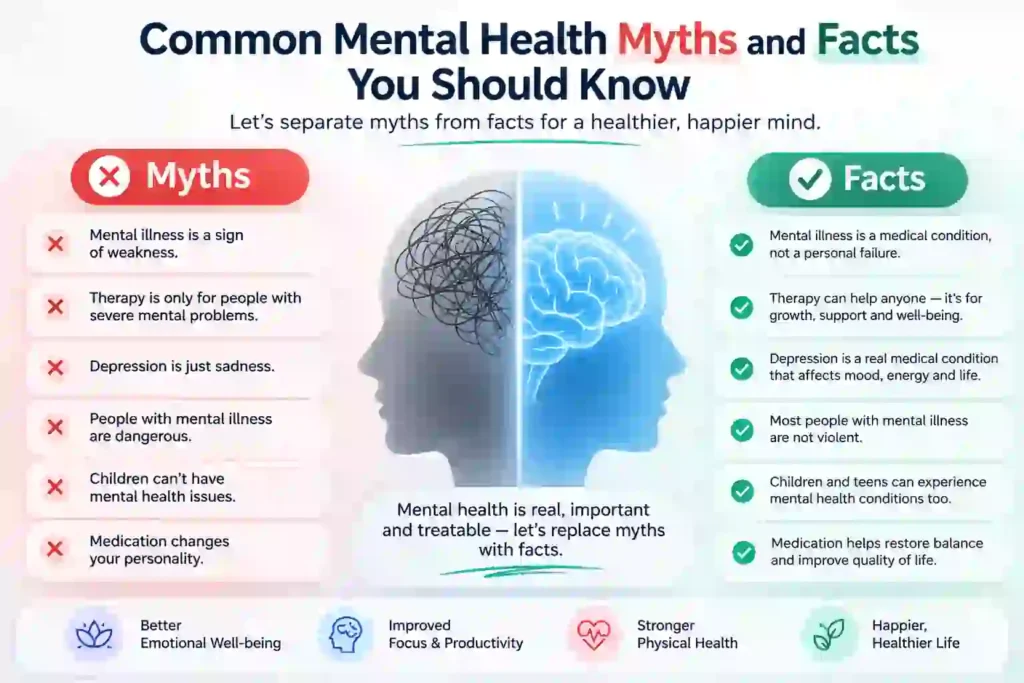
Common mental health myths and facts shape how society views emotional well-being, often more than science itself. Misinformation about mental illness can discourage people from seeking therapy or counseling, while accurate mental health facts encourage understanding, compassion, and recovery. This guide separates common mental health myths from verified facts about mental health, giving readers a clearer picture of what mental wellness truly involves.
Quick Answer
Common mental health myths can lead to stigma and prevent people from seeking help. Scientific evidence shows that mental illnesses are real medical conditions, treatments are effective, and recovery is possible with the right support.
Key Takeaways
✅Mental illness is common.
✅Therapy benefits people with many levels of need.
✅Depression and anxiety are medical conditions.
✅Seeking help is a sign of strength.
✅Early treatment improves outcomes.
Mental Health Myths and Facts Everyone Should Know
One widespread mental health misconception is that mental illness is rare or only affects a small group of people. In reality, mental health disorders such as depression, anxiety disorder, and bipolar disorder are common worldwide, and mental health awareness campaigns continue to highlight this truth about mental health. Another persistent myth about mental illness suggests that conditions like schizophrenia, PTSD, or obsessive-compulsive disorder reflect personal weakness rather than genuine psychiatric disorders rooted in brain health and biology.
A further mental health misconception claims that therapy and counseling are only for severe cases. Facts about mental health show that psychotherapy, cognitive behavioral therapy, and mindfulness practices support anyone managing stress, workplace stress, or mood disorders — not only those in crisis. Similarly, many assume emotional resilience means avoiding professional help altogether, when coping skills, self-care, and emotional support often work best alongside guided treatment.
Why Mental Health Education and Awareness Matter
Breaking mental health stigma starts with mental health education. Recognizing mental illness early, understanding emotional well-being, and promoting suicide prevention resources all depend on accurate psychological health facts rather than assumptions passed down through culture or fear.
Choosing the Right Mental Health Support
Individuals exploring mental health treatment often compare the best online therapy services, mental health apps, and licensed psychologist options before committing to a plan. Affordable online therapy, CBT therapy online, and mental wellness courses have made mental health counseling services more accessible, while employee mental health programs and mental health coaching support long-term emotional balance and behavioral health.
Frequently Asked Questions About Mental Health Myths and Facts
References
National Institute of Mental Health, "Mental Health Statistics"
Important: This article is for educational and informational purposes only and should not replace professional medical advice, diagnosis, or treatment
More From This Blog

12 Common Mental Health Disorders and Their Symptoms Explained
Without Medication: How to Improve Mental Health Naturally
How Social Media Impacts Mental Health in Children and Adults



mentally exhausted all the time
Signs of burnout
How to Stop Overthinking at Night: Practical Tips for a Calmer Mind


How to Calm Anxiety Before Sleeping Naturally
Can Lack of Sleep Cause Anxiety
Signs You May Need to See a Mental Health Professional